
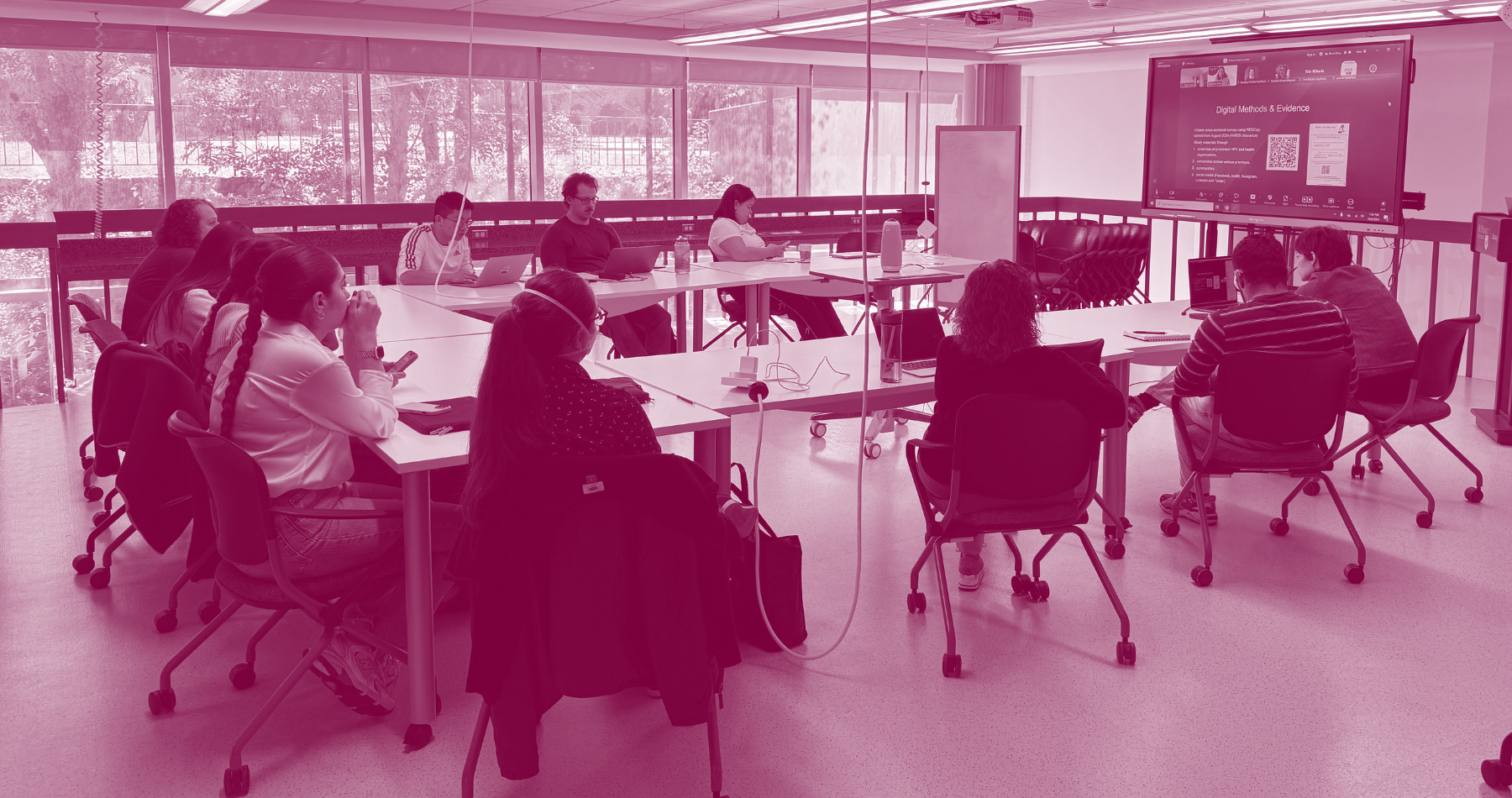
The Sherman Centre for Digital Scholarship invites applications from McMaster graduate students for its 2026-2027 Graduate Residency in Digital Scholarship. The residency program is designed to support graduate students to work on a facet of a research project in digital scholarship (related or not to their primary graduate research work), broadly defined, which expands and challenges their respective fields.
Residents are encouraged to consider digital scholarship through critical, technical, artistic and experimental purviews, and through methodological approaches and theoretical frameworks that advance digital scholarship or provoke what it means to ‘do’ it. The residency’s collegial atmosphere is sustained through recurrent meetings during the Fall 2026 and Winter 2027 terms, facilitating interdisciplinary dialogue and collaboration opportunities at the Sherman Centre and beyond. In addition to cohort meetings, the residency features self-directed research work. The format of the residency will be in-person.
Information Session
The Sherman Centre will hold a virtual information session for the 2026-2027 Graduate Residency program on Tuesday, Sept. 29th, from 2:00-3:00pm via Microsoft Teams. To join the session, click here.
Research Topics
Possible research topics include, but are not limited to:
Community Engagement, Archives, and Knowledge Stewardship: Principles, methods, and tools; community data collection and management, digital archives, community-based archives and projects, knowledge stewardship and preservation practices
Data, Computational Methods, and Digital Analysis: Analysis of networks and qualitative data, text and web scraping, text mining, topic modelling, discourse analysis, sonification, data collection and management, network visualzation, bibliometrics
Digital Media and Knowledge Mobilization: Story mapping, podcasting, digital storytelling, interactive exhibits, social media research and analysis, public-facing digital projects, data visualization
Digital Making and Emerging Technologies: 3D modelling and printing, data crafting, critical making, speculative design, data art, creative coding
Artificial Intelligence and Digital Scholarship: Generative AI analysis (ethics, bias, prompting), local LLM development and applied AI research, knowledge production and AI, Human-AI collaboration in research
Critical Digital Studies, Social Justice, and Equity: Social justice and digital scholarship, data justice, platform and internet studies, online communities, algorithmic systems, equity and inclusion in digital scholarship, critical digital cartography, digital countermapping
Digital Scholarship Pedagogy and Collaboration: Pedagogical methods and approaches, interdisciplinary collaboration, teaching and training with digital tools, inclusivity and accessibility
Applications are due October 15, 2026. Successful candidates will be notified by the end of October.
Residency Features
- In-person cohort experience
- Self-directed project
- Project consulting, both with Sherman staff, as well as with other Library units
- Opportunity to showcase works-in-progress at a graduate colloquium
- Collaborative working space at the Sherman Centre
- November 1, 2026 – May 31, 2027
Expectations
Residents are expected to participate fully in the cohort through the following activities:
- Participating in recurring meetings with the residency cohort during the Fall 2026 and Winter 2027 terms.
- Publishing project introduction and update posts on the Sherman Centre blog at the beginning and end of the residency period, respectively.
- Presenting their research project at a colloquium or roundtable event in May 2026.
- Developing a scholarly output (format to be determined by each resident)
- Attending Sherman Centre events throughout the Fall and Winter term, where possible.
- Attending 4 or more workshops in the Sherman Centre workshop series.
Time Commitment
- Fortnightly Cohort Meetings (1-1.5 h each)
- 4 Workshops (Approximately 1-1.5 h each)
- Independent Research Time (Varies)
- Presentations and updates, as requested
Eligibility
Current or accepted graduate students at McMaster University
Application
Applicants are asked to provide the following information:
1. A personal statement (~250 words) that explains: (i) how the residency complements your graduate research and training at McMaster University; and, (ii) what you hope to get out of the residency experience.
2. A project proposal (500 words maximum) that describes the residency project you wish to undertake during the residency. We encourage applicants to consider proposing a smaller component to a larger project. For instance, the residency project could be part of or complementary to your thesis or dissertation research.
Sections to include in the proposal: (i) a description of the project, including key theoretical, conceptual and methodological approaches informing the work; (ii) the form the output will take, which could include, for instance: a public installation (broadly defined), a visualization (broadly defined), a scholarly publication, a conference paper, a poster, an annotated bibliography, an interview, an artistic, creative or experimental intervention, a public data set, a digital collection (broadly defined), a database, a tool-kit, a workshop module, a syllabus, a class assignment, etc.; (iii) its intended audience; (iv) a project timeline for the residency period; (v) a description of the technical resources and competencies that need to be developed to achieve the project goals; (vi) if applicable, a description of the materials, data or corpora required and how access to it will be obtained.
3. A current C.V.
4. The names of two references who can comment on your capacity and ability to actively contribute to the residency program.
Questions?
For more information about the residency or the application process, please contact the Sherman Centre at scds@mcmaster.ca

Leave a Reply